By Daniel Mercer · Updated August 9, 2026 · 5 min read
Both are screen-free bands built around recovery, sleep and HRV. But there's one difference so big it settles the choice for most people before you even look at the sensors: the subscription.
The short version: Whoop simply won't work without an ongoing membership (US$199 to $359 a year depending on the tier). The Hume Band 2.0 is a one-time purchase with no mandatory fee — and it adds blood pressure trends Whoop doesn't have. Whoop still wins for serious-athlete coaching and app maturity. For everyone else, the Hume Band delivers the same core insights without the forever-fee.
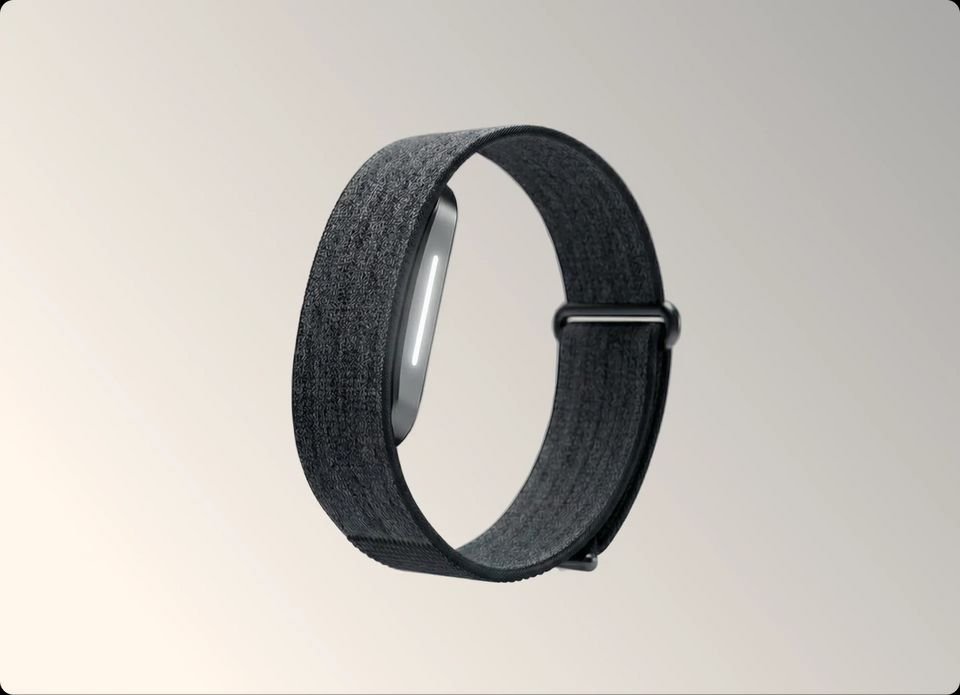
The Hume Band 2.0: the same screen-free, recovery-focused idea as Whoop — without the monthly bill.
The subscription: the difference that matters most
Whoop's whole model is the membership. The band itself is cheap (sometimes free) to get, but it's useless without an active subscription — stop paying and it stops working. Over three years that's roughly US$597 to $1,077 in fees.
The Hume Band flips that: you pay $249 once and own it. Core metrics — sleep, HRV, recovery, SpO2, blood pressure trends — are free forever. There's an optional AI-coaching tier at about $8.99/month, but you never have to touch it. If avoiding monthly fees matters to you, this is decisive. It's why the Hume Band tops our best subscription-free trackers guide.
Side by side
Hume Band 2.0
Whoop
Subscription
None required
Required
Ongoing cost
$0
US$199–$359/yr
One-time price
$249
Hardware + membership
Heart rate & HRV
✓
✓
Sleep tracking
✓
✓
Blood pressure trends
✓
✕
Strain / athlete coaching
Basic (free)
✓ Advanced
Battery life
Up to 14 days
~14 days
Screen-free comfort
✓
✓
App maturity
Newer, improving
Very mature
Where Whoop still wins
Let's be fair: Whoop has years of head start. Its app is more polished, its strain-and-recovery coaching is deeper, and it's a favourite of serious athletes for good reason. If you train hard, live inside training-load data, and the monthly fee doesn't bother you, Whoop is excellent.
Where the Hume Band wins
Cost: one-time price, no forever-fee — hundreds saved over a few years
Blood pressure trends: a metric Whoop doesn't offer at all
Ownership: the device keeps working whether or not you ever pay for coaching
Simplicity: put it on, check the app, done — no data overwhelm
Our verdict: if you're a competitive athlete who wants the most advanced coaching and doesn't mind a subscription, choose Whoop. For the other 90% of people who just want reliable sleep, recovery and health tracking without a monthly bill, the Hume Band 2.0 is the smarter buy — and it's accurate where it counts (we tested that in is the Hume Band accurate?).
Our pick: the Hume Band 2.0
The subscription-free recovery band, with blood pressure trends and a 45-day money-back guarantee. One-time $249, no monthly fee.
It depends on what you value. The Hume Band is better for cost and simplicity — one-time price, no subscription, plus blood pressure trends. Whoop is better for serious athletes who want the most mature strain-and-recovery coaching and don't mind paying a membership forever.
Does the Hume Band need a subscription like Whoop?
No. That's the key difference. Whoop does not work at all without an ongoing membership (US$199 to $359 a year depending on the tier). The Hume Band is a one-time purchase and its core metrics — sleep, HRV, recovery, blood pressure trends — are free forever, with an optional paid coaching tier you can ignore.
Is the Hume Band as accurate as Whoop?
For the metrics that matter most, it's close. Independent testing found resting heart rate, overnight HRV and total sleep tracked closely between the Hume Band 2.0 and Whoop, with trends moving together. Both, like all wrist bands, are weaker at step counts and peak heart rate during heavy lifting.
Which has better battery life, Hume Band or Whoop?
They're similar — both reach roughly 14 days per charge in testing, far longer than a smartwatch. The Hume Band charges in under an hour. Neither needs the nightly charging that most wrist wearables demand.
DM
Daniel Mercer
Health & Wearables Reviewer, FindsWorthKnowing.shop
Daniel reviews consumer health tech with a focus on real-world value. Affiliate disclosure: this page has an affiliate link for the Hume Band; we may earn a commission at no extra cost to you. We're not affiliated with Whoop.